September 16, 2026 · 5 min read
How Long Does Meal Prep Last? Storage Times and Food Safety Basics
By The Meal Prep Plans Team — evidence-based nutrition writers
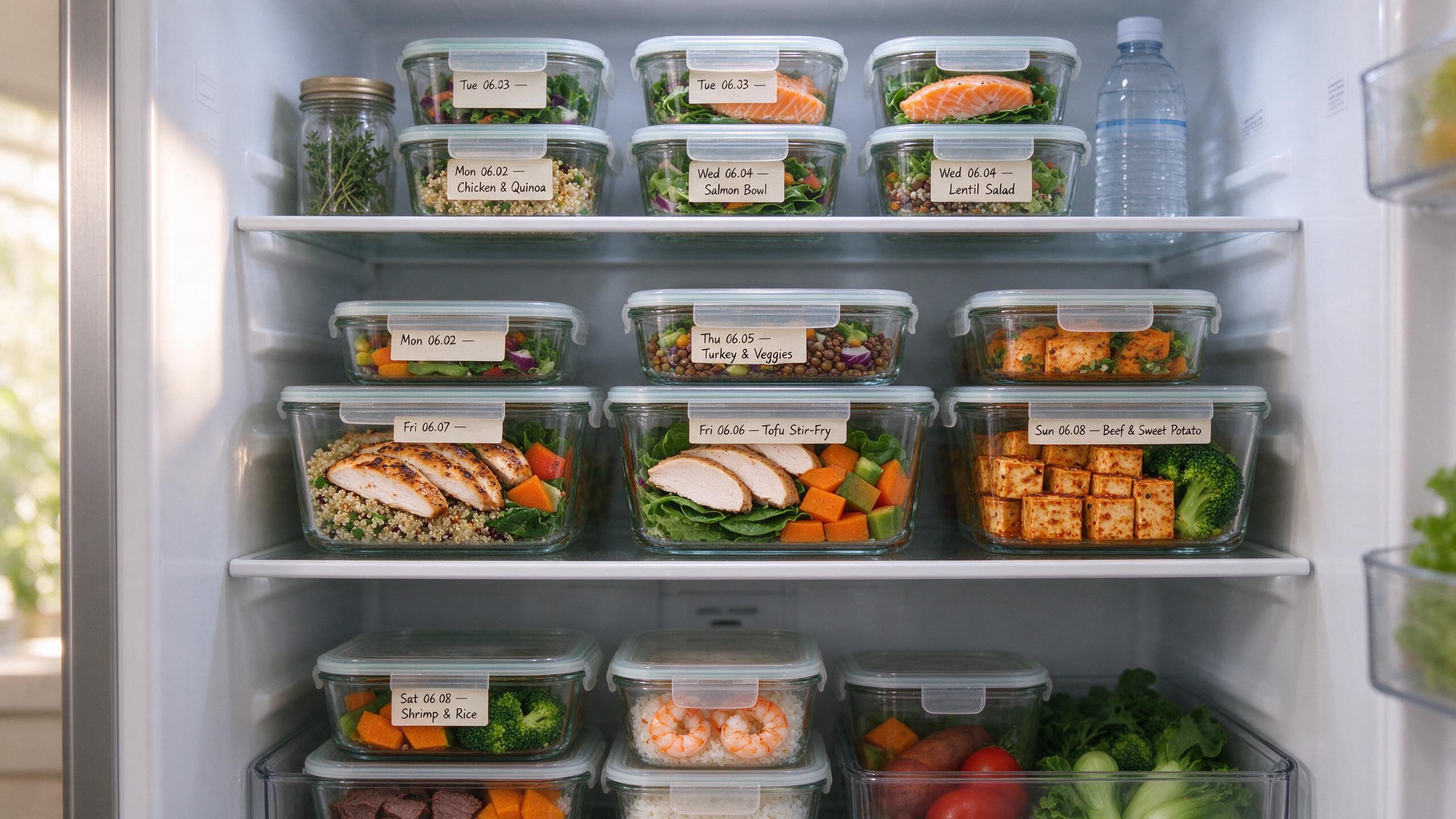
Meal prep is only useful if the food is still good when you open the container. The difference between a Thursday lunch that tastes freshly cooked and one that goes in the bin comes down to three things: how fast the food cooled, how cold the fridge is, and how well the container seals. Get those right and most batch-cooked meals hold for four days without losing quality.
The Two-Hour Rule Comes First
Cooked food should not sit at room temperature for more than two hours, and the clock starts the moment it comes off the heat. If the room is above 90°F, cut the window to one hour. That is why a big pot of chili should be divided into shallow containers right away instead of cooling on the stove until bedtime.
Temperature matters more than any calendar date. A fridge running at 45°F will age food noticeably faster than one at 37°F, and most home fridges run warmer than the dial suggests. Put a cheap thermometer on the middle shelf, check it once in a while, and adjust until it reads between 35°F and 40°F. The freezer should hold at 0°F or below, which is cold enough to stop bacterial growth and keep ice crystals small.
Fridge Storage Times at a Glance
These are practical windows for a fridge running at 40°F or below. Count day one as the day you cooked.
- •Cooked chicken, turkey, and beef: 3 to 4 days.
- •Cooked fish and seafood: up to 3 days, best within 2.
- •Soups, stews, and chili: 3 to 4 days.
- •Cooked rice and grains: up to 4 days, cooled within one hour of cooking.
- •Hard-boiled eggs: up to 1 week in the shell.
- •Baked egg muffin cups: up to 4 days.
- •Canned-style beans cooked at home: 4 days.
- •Undressed mason jar salads: 4 to 5 days, kept upright.
- •Washed and cut raw vegetables: 3 to 5 days in a sealed container.
- •Raw poultry and ground meat: 1 to 2 days before cooking or freezing.
Freezer Storage Times
Frozen food stays safe far longer than it stays delicious; the numbers below are about quality, not just safety. Keep the freezer at 0°F or below.
- •Soups, chili, and lentil stew: 3 months.
- •Cooked ground meat dishes such as burrito bowl filling: 3 to 4 months.
- •Cooked chicken pieces: 2 to 3 months.
- •Egg muffin cups and frittata portions: 3 months.
- •Cooked rice and quinoa: 1 month, for best texture.
- •Smoothie freezer packs: 3 months.
Freezer Burn and How to Avoid It
Freezer burn is not spoilage; it is a dried-out surface caused by air reaching the food. It shows up as grey or white patches on meat and ice crystals inside the bag, and while it is safe to eat, the texture suffers. Three habits prevent it: freeze food in the coldest part of the freezer rather than the door, press the air out of bags or leave headroom in rigid containers, and label everything with a date so nothing lives in there for a year.
- •Wrap portions tightly, or use flat containers that stack rather than round ones.
- •Freeze soups and stews in flat bags, which thaw in about an hour in cold water.
- •Write the freeze date on the bag, not just the name of the dish.
How to Store So Food Lasts Longer
- 1Cool fast: spread hot food in shallow containers rather than one deep pot.
- 2Seal in airtight containers, glass or BPA-free plastic, once the food stops steaming.
- 3Keep dressings, sauces, and crunchy toppings separate until serving.
- 4Store raw meat on the bottom shelf so nothing drips onto cooked food.
- 5Label every container with the name and the date you cooked it.
- 6Leave a little headroom in freezer containers so liquid can expand.
Reheating Safely
Reheat portions only once, and bring them to 165°F throughout rather than warming them until they are merely hot at the edges. A covered container with a tablespoon of water keeps rice and grains from drying out; stirring halfway through does the same for thicker dishes. Never reheat the same portion twice, and never reheat a whole batch you have already served from — take out what you will eat and reheat only that.
Signs It Is Time to Throw It Out
- •A sour, yeasty, or otherwise off smell that was not there on day one.
- •Slimy texture on meat, beans, or vegetables.
- •Any visible mold, including small spots on rice or bread.
- •Bubbling or fizzing in a dish that is not intentionally fermented.
- •Color changes such as grey meat or dull, dark greens.
- •When you are genuinely unsure, throw it out. One meal costs less than a day of feeling unwell.
- •A container that hisses or pops when opened after only a few days.
- •Sauce that has separated into something watery and something chalky.
Make-Ahead Timelines That Work
A simple weekly rhythm keeps everything inside its window. Cook on Sunday and pack Monday through Thursday lunches. Freeze anything you will not reach by Thursday, and pull one portion down to the fridge the night before you plan to eat it. A Wednesday evening top-up of fresh greens and herbs keeps the second half of the week from feeling like leftovers.
One more habit makes all of this easier: cook with the calendar in mind. If you know Thursday is a late night, freeze that portion on Sunday instead of hoping it survives. If your week always falls apart on Wednesday, plan a two-day batch on Tuesday night rather than a heroic Sunday session. Matching the cooking schedule to the week you actually have is what separates meal prep that lasts from meal prep that ends up in the bin.
None of this is complicated, but all of it has to happen on prep day, not on the day you open the fridge and wonder. Cool it fast, seal it tight, date it, and reheat it once — and your batch cooking will taste like it was made yesterday.