September 8, 2026 · 6 min read
How to Meal Prep for Weight Loss: A Beginner's Step-by-Step Guide
By The Meal Prep Plans Team — evidence-based nutrition writers
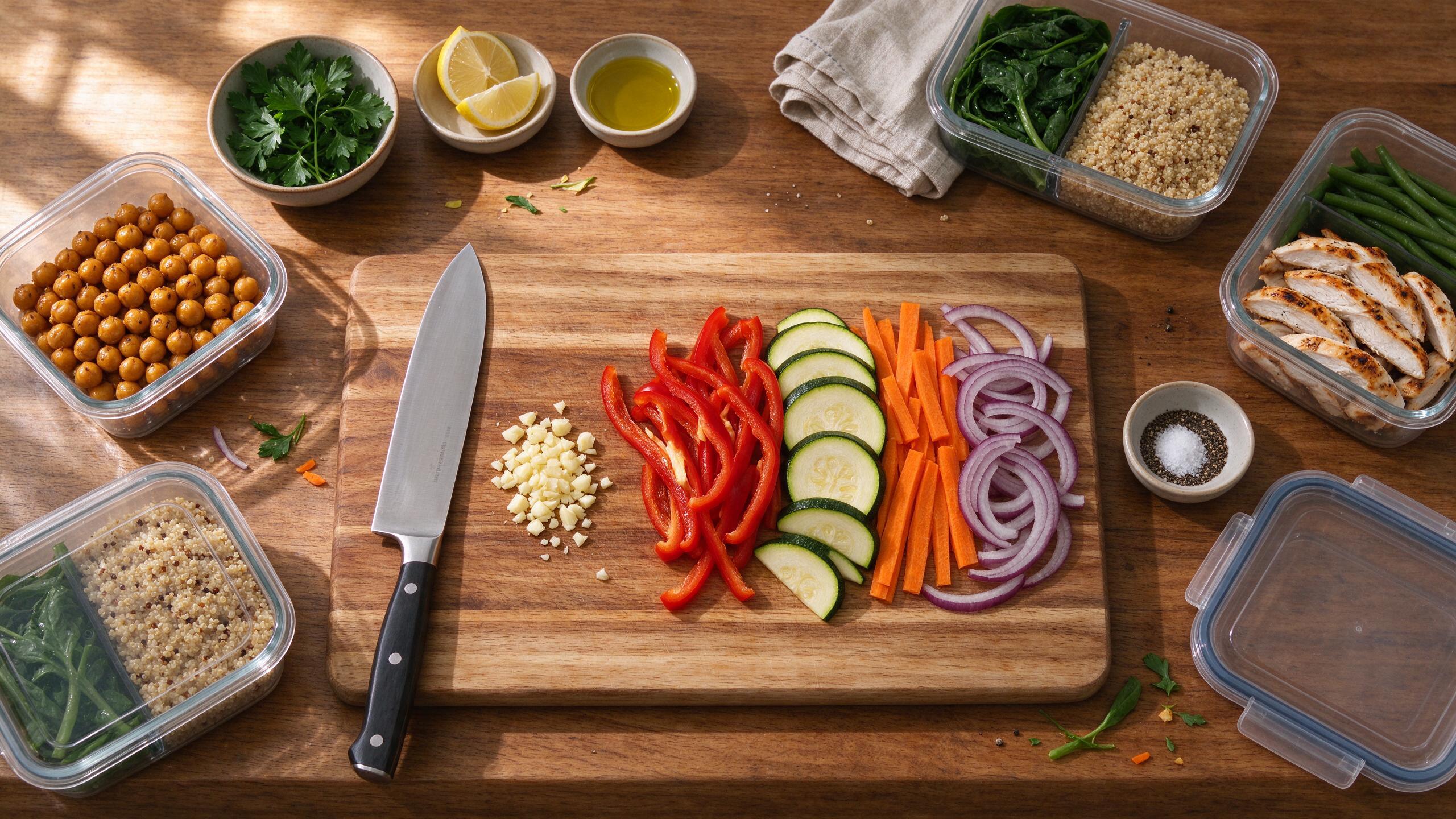
Meal prep is not a personality trait, and it does not require a spotless kitchen or a spreadsheet full of macros. It is a loop: pick two or three recipes, cook them in one session, and portion them into containers you can grab without thinking. If weight loss is the goal, that loop removes the two biggest obstacles most people hit — the six o'clock decision about dinner, and the takeout order that usually follows it.
Why Meal Prep Helps with Weight Loss
When food is already cooked and portioned, you eat what is in the container instead of whatever is fastest. That single change is why meal prep shows up in so many weight-loss routines. A container holding 500 calories and 40 grams of protein is a decision you already made on Sunday, and it is far easier to follow through on than a decision you have to make while you are hungry and tired.
There is a money angle too. Batch-cooked meals usually land between $2.50 and $4 per serving, compared with $12 to $16 for a takeout lunch. Prepping also cuts food waste, because you buy ingredients against a specific plan instead of hoping inspiration strikes before the spinach turns to slime.
Step 1: Choose a Prep Day and a Format
Pick one day and protect two hours on it. Sunday afternoon works for most people, but any day you are home for a couple of hours will do. There are three formats, and beginners should start with the first. Batch-and-assemble means cooking complete meals and dividing them into containers. Component prep means cooking proteins, grains, and vegetables separately so you can mix them during the week. Full freezer cooking means making and freezing entire meals, which is best once you know which recipes you actually like.
Two hours is the honest number. It sounds like a lot until you compare it with the five or six separate cooking sessions, grocery runs, and delivery waits it replaces.
Step 2: Pick Recipes That Reheat Well
Not every dish survives three days in the fridge. Build your first weeks around food that improves or holds steady with time.
- •Soups, chili, and lentil stews often taste better on day three, because the flavors have time to settle.
- •Grain bowls and burrito bowls reheat evenly and keep their texture.
- •Baked egg cups and frittatas reheat in under two minutes.
- •Sheet-pan chicken and roasted vegetables hold up for four days.
- •Save delicate dressed greens, fried food, and any fish you plan to eat later in the week for the first day or two.
Step 3: Build a Balanced Container
You do not need to track macros to build a good container. Use your hand as a measuring tool: one palm of protein, one fist of vegetables, one cupped hand of cooked grains or potatoes, and one thumb of fat. That lands most meals between 450 and 550 calories with 30 to 40 grams of protein, a range that keeps most people comfortable until the next meal.
- •Protein: chicken, turkey, lean beef, salmon, eggs, Greek yogurt, lentils, beans, tofu.
- •Carbs: brown rice, quinoa, oats, potatoes, whole-grain pasta, tortillas.
- •Fat: olive oil, avocado, nuts, seeds, feta, tahini.
- •Vegetables: aim for two colors at every meal, fresh or frozen.
Step 4: Shop Once with a Short List
A single grocery run for a week of prepped food should take about twenty minutes if you walk in with a list and skip the aisles you do not need.
- 1Check the fridge and pantry first and write down what you already have.
- 2List ingredients by recipe, in columns, so nothing is missed.
- 3Buy proteins that are on sale and freeze half of them immediately.
- 4Choose frozen vegetables for anything you will eat after Wednesday.
- 5Add one fast breakfast and one easy snack so mornings are covered.
- 6Skip pre-cut produce and single-serve packs unless the time they save is genuinely worth the markup to you.
Step 5: Cook in Assembly Lines
Assembly-line cooking means everything happens at once instead of one dish at a time.
- 1Preheat the oven to 425°F and start the grains on the stove.
- 2Roast vegetables on one sheet pan while the grains cook.
- 3Cook the proteins in the largest skillet or on the grill, in batches if needed.
- 4Portion into containers while the food is still warm and easy to divide.
- 5Cool everything on the counter for 15 to 20 minutes before sealing.
Step 6: Cool, Store, and Label
Food should not sit at room temperature for more than two hours. Divide big pots into shallow containers so they cool faster, keep the fridge at 40°F or below, and write a date on every lid. Most cooked meals keep three to four days in the fridge and two to three months in the freezer.
Step 7: Reheat Without Getting Bored
The number one reason people quit meal prep is monotony. Three small moves fix it. Change the sauce when you plate — pesto on Monday, salsa on Tuesday, yogurt and dill on Wednesday. Add a fresh texture at the end, like toasted seeds, shredded cabbage, or a squeeze of lime. And flip the format: a grain bowl becomes a wrap, and a salad becomes a stuffed pita.
- •Keep two sauces in the fridge and rotate them across the same base.
- •Store crunchy toppings separately and add them at the last second.
- •Freeze one portion of every batch so week four is not a rerun of week one.
Two Mistakes That Sink First-Time Preppers
The first is cooking five identical meals in week one. Your palate gets bored by Wednesday, the containers stop looking appetizing, and the food goes in the trash. Start with two recipes and four portions each. The second is buying a full week of fresh produce on Sunday. Buy fresh greens and herbs for the first three days, and lean on frozen vegetables plus sturdy produce such as carrots, cabbage, and potatoes for the rest of the week.
How long does meal prep take?
A realistic session runs ninety minutes to two hours and yields 10 to 14 servings. That is roughly one hour of work for every four or five meals you will not have to cook later.
Start this week with one recipe, five containers, and a marker for the lids. Once the loop feels normal, add a second recipe and one freezer portion. The exciting part of meal prep is how good it looks on Sunday; the useful part is how boring it feels by Wednesday, and that is exactly why it works.